
Loading...
Serving Gilroy, CA and surrounding areas. (669) 345-1108
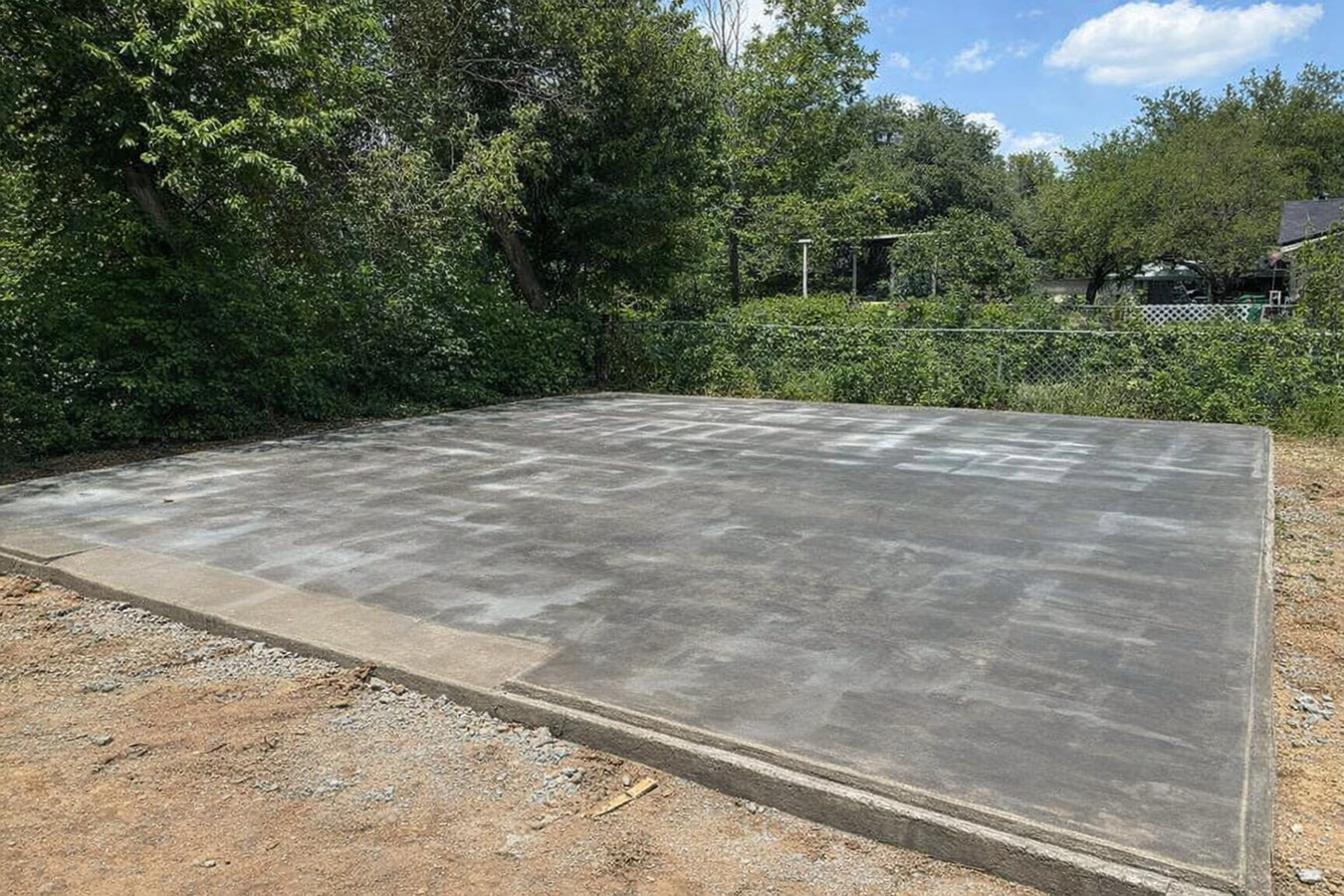
Need a concrete slab for a new home, garage, or addition? We build foundations in Gilroy that are ready for local clay soils, seismic loads, and the city permit process.
Slab foundation building in Gilroy starts with grading and compacting the ground, laying a gravel drainage layer and vapor barrier, placing steel reinforcement, passing a city inspection, and then pouring and finishing the concrete - most standard residential slabs take two to four active work days, with the permit process adding one to three weeks before work can begin.
A concrete slab is both the floor your home sits on and the structural base that carries the weight of your walls and roof down into the ground. That means the work you cannot see - the base preparation, the vapor barrier, the rebar grid - matters as much as the finished surface. In Gilroy, where clay soils shift with every rainy season, skipping those steps shows up in cracks and uneven floors within a few years. Many homeowners building a new addition or ADU also plan for concrete footings at the same time, since both are permitted and inspected together.
Whether you are building a new home, converting a garage, or adding a room, we handle the full process - from the permit application through the final city sign-off.
The most common reason to pour a slab is that you are building something new - a home, garage, ADU, or room addition - and need a structural base. Without a properly built foundation slab, no structure above it will be stable or safe long-term.
Hairline cracks in concrete are normal and usually harmless. But cracks wide enough to slip a pencil into, or diagonal cracks running across corners, mean the slab has moved or settled unevenly. In Gilroy, this kind of cracking is often linked to clay soil expanding and contracting through wet and dry seasons.
When a slab settles unevenly, the walls and door frames above it shift slightly out of square. Doors that used to close easily now stick, or swing open by themselves, because the floor beneath them is no longer level. This symptom builds gradually over several years and is easy to miss until it becomes obvious.
If moisture is coming up through your slab - which happens when a vapor barrier was not installed or has degraded - you may notice damp patches, a persistent musty smell, or flooring that feels soft underfoot. Gilroy's seasonal soil moisture swings make this more likely on older slabs where vapor barriers were not standard.
We handle the complete scope of slab foundation building - from pulling the permit and preparing the site to placing the steel, coordinating the city inspection, pouring the concrete, and finishing the surface. Every slab we pour includes proper soil grading and compaction, a gravel drainage layer, a polyethylene vapor barrier, and a steel reinforcement grid sized for Gilroy's seismic zone. Homeowners planning a full new build often pair the slab with a foundation installation project that covers stem walls and footings, so the entire structural base is done in one permitted scope.
For garage conversions and ADU builds, we also work with homeowners who need the existing concrete floor assessed - sometimes an existing slab can be upgraded, and sometimes a new pour is required to meet current standards. Either way, we tell you what we find before we start any work, so there are no surprises when the permit inspector shows up. If your project also calls for concrete footings under load-bearing walls or posts, we scope both together so the reinforcement and inspections are coordinated from the start.
Suits homeowners building a new primary residence and needing a full slab poured to permitted drawings with seismic-code reinforcement.
Suits homeowners converting a garage to living space or building a detached ADU that needs a new or upgraded concrete floor meeting current standards.
Suits homeowners extending their home with a new room addition that requires a separate slab tied into the existing structure and permitted through the city.
Suits homeowners with an existing cracked or settling slab who need an honest assessment of whether repair or full replacement is the more practical choice.
Gilroy sits at the southern end of the Santa Clara Valley, where the native soil contains a significant proportion of clay. Clay expands when it absorbs water and shrinks when it dries - and in Gilroy that cycle happens every year as winter rains soak the ground and summer heat bakes it dry. That repeated movement is the single biggest reason concrete slabs in this area crack or settle unevenly over time. We compact the base more thoroughly than the minimum code requires and design the drainage layer specifically for Gilroy conditions, because a slab that was built for generic soil conditions will not hold up the same way here. The same soil challenges apply across the region, and we bring that same preparation discipline to projects in Hollister and Morgan Hill, where the Santa Clara Valley clay runs just as deep.
The Calaveras Fault runs just east of Gilroy, and California building standards require that foundation slabs in seismically active areas include specific reinforcement details - more steel, placed in specific patterns - to help the structure move with the ground rather than crack apart. We build to those requirements on every project, and the city inspector confirms them before any concrete is poured. Gilroy summers also regularly push above 90 degrees, and hot-weather pours require extra steps - scheduling the pour for early morning and keeping the surface moist during curing - to make sure the slab reaches its full strength rather than drying unevenly on top.
We visit your Gilroy property in person before giving you a price - because slope, soil access, and concrete truck routing all affect cost. Expect the visit to take 30 to 60 minutes, and expect a written estimate within one business day.
We submit the permit application to the City of Gilroy Building Division on your behalf, including drawings showing slab dimensions and reinforcement. Plan review typically takes one to three weeks - we manage the process so you do not have to follow up with the building department.
Once the permit is approved, we grade and compact the base, install the gravel drainage layer and vapor barrier, and set the steel reinforcement inside the forms. A city inspector then verifies the steel placement before any concrete is ordered - nothing gets poured until it passes.
After inspection approval, the concrete truck arrives and we complete the pour and finish in a single day for most residential slabs. The surface is firm for foot traffic within 24 to 48 hours. We schedule the final city inspection to close out the permit - leaving a permit open can cause problems when you sell.
We handle the permit, the inspection, and every step of the build. No pressure - just a free on-site estimate with a written quote you can compare.
(669) 345-1108We have poured slabs throughout the southern Santa Clara Valley and understand how local clay soil responds to each wet and dry cycle. That knowledge shapes our base prep and drainage design on every project - not just the ones where the soil looks bad.
We submit the permit application, coordinate the pre-pour inspection, and schedule the final sign-off with the City of Gilroy Building Division. You do not need to track anything - we keep you posted at each stage and move the project forward without you chasing paperwork.
Gilroy sits near the Calaveras Fault, one of the more active fault systems in the Bay Area. We build seismic reinforcement into our standard slab design - not as an add-on - because California code requires it and your home deserves it. The California Geological Survey maps confirm Gilroy falls within a seismic hazard zone.
When Gilroy temperatures push above 90 degrees in summer, fresh concrete can dry unevenly on the surface before it has cured underneath. We schedule summer pours for early morning and take specific steps to keep the slab moist during the curing window - so your foundation reaches its full strength regardless of the season.
Every slab we build is permitted, inspected, and built to the standards the American Concrete Institute and California code require. That means when the work is done, you have a foundation with a clean permit record and no questions about whether it was done right.
Complete foundation installation for new homes and major rebuilds, including stem walls, footings, and seismic anchoring to current California standards.
Learn morePoured concrete footings for load-bearing walls, posts, decks, and structures that need a stable, code-compliant base beneath them.
Learn morePermit slots fill up before the dry season - contact us now to lock in your project timeline and get a free written estimate for your site.